
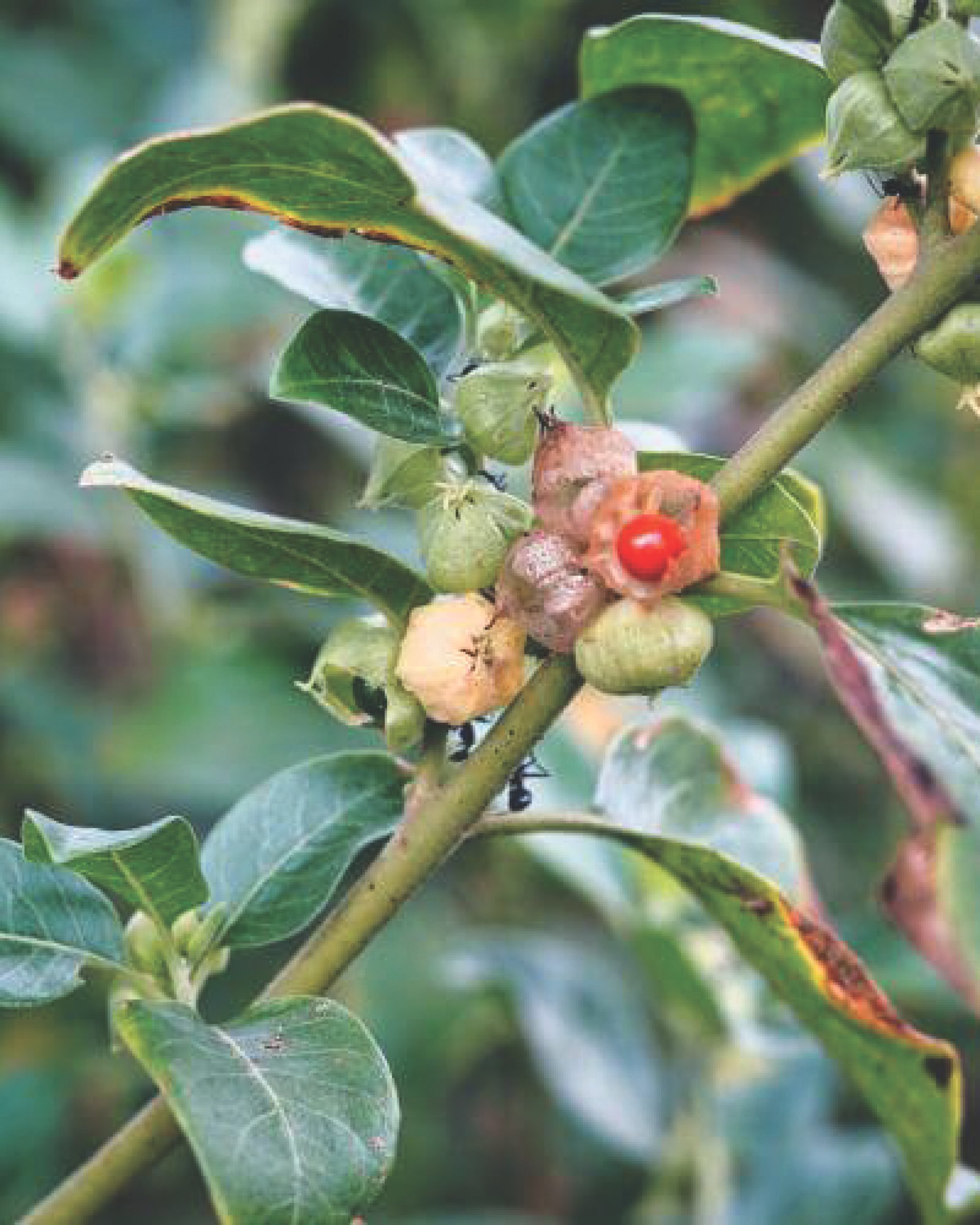
Botanical name : Centella asiatica
| Family | Apiaceae |
| Part used | Leaves & aerial parts |
| Active compounds | Asiaticoside, Madecassoside & Asiatic acid |
| Also known as | Mandukaparni / Indian Pennywort |
| Grown in | India & other tropical regions of Asia |
| Traditional use | Ayurvedic wellness & skin care |
| Dosha effect | Traditionally associated with balancing Pitta |
- Botanical name : Centella asiatica
- Meet Gotu Kola
- From Traditional Herb to Modern Ingredient
- Why Is Gotu Kola Popular in Skincare?
- The Compounds Behind Gotu Kola
- Gotu Kola in Traditional Wellness
- Gotu Kola and Modern Skincare
- Is Gotu Kola the Same as Centella?
- Gotu Kola vs. Other Botanical Skincare Ingredients
- What Makes Gotu Kola Special?
- Frequently Asked Questions
- 1. What is Gotu Kola?
- 2. What is Gotu Kola used for?
- 3. Is Gotu Kola good for the skin?
- 4. What are the main active compounds in Gotu Kola?
- 5. Is Gotu Kola the same as Centella asiatica?
- 6. Can Gotu Kola be used every day?
- 7. Is Gotu Kola suitable for sensitive skin?
- 8. Does Gotu Kola help with collagen?
- 9. What is the difference between Gotu Kola and Bakuchiol?
- 10. Can Gotu Kola be taken as a supplement?
- 11. Is Gotu Kola an Ayurvedic herb?
Some plants become popular because they are new. Others become interesting because they have been around for centuries.
Gotu Kola belongs firmly to the second category.
Known botanically as Centella asiatica, this small green herb has a long history across Ayurvedic and other traditional Asian wellness practices. Today, it has moved beyond traditional herbal preparations and into modern skincare, wellness products, teas, supplements, and botanical formulations.
So, what makes this unassuming little plant so interesting?
Ancient Roots
The Herb of Ayurveda
Known as Mandukaparni, Gotu Kola (Centella asiatica) has been valued in Ayurveda and traditional Asian wellness practices for centuries. Its leaves have traditionally been used in herbal preparations associated with skin and overall wellbeing.
Modern Skincare
A Botanical for Healthy-Looking Skin
Today, Gotu Kola is a popular skincare botanical, studied for compounds such as asiaticoside, madecassoside, and asiatic acid. These compounds have attracted research into skin barrier support, soothing properties, and collagen-related processes.
Meet Gotu Kola
Gotu Kola, or Centella asiatica, is a creeping herb that grows naturally in moist, tropical environments across parts of Asia.
In Ayurveda, it is commonly known as Mandukaparni. It has traditionally been valued as a rejuvenating herb and has been used in various preparations associated with skin, cognitive wellness, and general vitality.
Its modern popularity is largely connected to the naturally occurring compounds found within the plant, particularly asiaticoside, madecassoside, and asiatic acid.
These compounds have made Gotu Kola particularly interesting to researchers and the skincare industry.
From Traditional Herb to Modern Ingredient
The story of Gotu Kola is a good example of how traditional botanical knowledge continues to influence modern wellness.
For generations, the plant has been used in traditional systems of medicine across Asia. Modern researchers have since turned their attention to the individual compounds present in the plant and their biological properties.
This has led to growing interest in Gotu Kola-based skincare and wellness formulations.
You may now find it in everything from facial creams and serums to herbal teas and botanical supplements.
Why Is Gotu Kola Popular in Skincare?
Walk into a modern skincare store and you’ll often find Gotu Kola listed alongside other botanical ingredients.
One reason is its association with skin repair and soothing.
Research into Centella asiatica has explored its effects on processes involved in wound healing, collagen production, inflammation, and skin barrier function.
This has made Gotu Kola particularly interesting for products designed to support healthier-looking skin.
A Botanical for Skin Comfort
Skin can become stressed by environmental exposure, dryness, irritation, and everyday wear and tear.
Compounds found in Gotu Kola have been studied for their potential soothing and anti-inflammatory properties, which is why extracts of the plant are commonly incorporated into formulations designed for sensitive or stressed-looking skin.
Supporting the Skin Barrier
A healthy skin barrier helps the skin retain moisture and provides protection against external irritants.
Some research has investigated Gotu Kola compounds for their potential role in supporting skin barrier function and maintaining the skin’s overall condition.
This is one reason you may see Centella asiatica featured in moisturizers and calming skincare products.
Collagen and Skin Elasticity
Collagen is one of the proteins responsible for the structure and firmness of our skin.
Certain compounds in Gotu Kola, particularly asiaticoside and asiatic acid, have been studied for their relationship with collagen synthesis and skin repair.
This has contributed to the plant’s popularity in products focused on the appearance of ageing and skin texture.
The Compounds Behind Gotu Kola
The plant may look simple, but its chemistry is anything but.
Some of the best-known compounds found in Gotu Kola include:
Asiaticoside
A triterpenoid saponin that has been extensively studied for its potential role in skin repair and collagen-related processes.
Madecassoside
Another important compound that has attracted interest for its potential soothing and skin-supporting properties.
Asiatic Acid
A naturally occurring triterpenoid studied for its antioxidant, anti-inflammatory, and skin-related properties.
These compounds are part of what makes Gotu Kola such an interesting botanical ingredient.
Gotu Kola in Traditional Wellness
Modern skincare is only one chapter of the Gotu Kola story.
In Ayurveda, Mandukaparni has traditionally been associated with several aspects of wellness and has been used in herbal preparations for centuries.
Traditional use, however, should not automatically be interpreted as proof of modern medical effectiveness. Contemporary research is still exploring the mechanisms and potential applications of the plant’s various compounds.
That distinction is important when looking at any traditional herb through a modern lens.
Gotu Kola and Modern Skincare
Today, Gotu Kola appears in many different types of skincare products.
You may encounter it in:
- Serums
- Moisturizers
- Creams
- Cleansers
- Face masks
- Soothing formulations
- Products designed for dry or sensitive-looking skin
It is particularly popular in formulations that focus on calming, hydration, skin barrier support, and overall skin appearance.
Is Gotu Kola the Same as Centella?
Yes.
Gotu Kola, Centella asiatica, and Indian Pennywort are commonly used names for the same plant.
However, it is worth paying attention to the ingredient list of a skincare product. A product may contain Centella asiatica extract, purified compounds from the plant, or a combination of botanical ingredients.
The concentration and formulation can make a significant difference to how a product performs.
Gotu Kola vs. Other Botanical Skincare Ingredients
One of the interesting things about Gotu Kola is that it doesn’t necessarily need to compete with other popular botanicals.
Instead, it often works as part of a broader formulation.
While ingredients such as aloe vera are commonly associated with hydration and soothing, and bakuchiol is often discussed in relation to visible signs of ageing, Gotu Kola has developed its own identity around skin comfort, barrier support, and skin-repair research.
The result is an ingredient that fits naturally into modern minimalist skincare.
What Makes Gotu Kola Special?
Perhaps the most fascinating thing about Gotu Kola is the journey it has taken.
It began as a humble herb growing in tropical environments.
Traditional wellness systems recognized its value long before modern skincare laboratories started studying its individual compounds.
Today, Centella asiatica sits at the intersection of those two worlds — traditional botanical knowledge and modern cosmetic science.
And that is exactly why this little green herb continues to attract attention.
Frequently Asked Questions
1. What is Gotu Kola?
Gotu Kola is a small tropical herb botanically known as Centella asiatica. It is also known as Mandukaparni or Indian Pennywort and has a long history of traditional use in Ayurveda and other Asian wellness practices.
2. What is Gotu Kola used for?
Gotu Kola is traditionally used in herbal preparations for various aspects of wellness. In modern skincare, it is commonly used in products focused on soothing, hydration, skin barrier support, and healthy-looking skin.
3. Is Gotu Kola good for the skin?
Gotu Kola has attracted research because of compounds such as asiaticoside, madecassoside, and asiatic acid. Studies have explored their potential roles in collagen-related processes, skin repair, and inflammation.
4. What are the main active compounds in Gotu Kola?
Some of the best-known compounds include asiaticoside, madecassoside, asiatic acid, and madecassic acid. These compounds are collectively known as triterpenoid compounds.
5. Is Gotu Kola the same as Centella asiatica?
Yes. Gotu Kola is the common name for Centella asiatica, while Mandukaparni is one of its traditional Ayurvedic names.
6. Can Gotu Kola be used every day?
Gotu Kola is commonly included in daily skincare products such as serums and moisturizers. Follow the instructions of the specific product you’re using, especially when combining it with other active ingredients.
7. Is Gotu Kola suitable for sensitive skin?
Centella asiatica is commonly included in products designed for sensitive or irritated-looking skin because of its soothing reputation. However, individual reactions can vary, so patch-testing a new product is a good precaution.
8. Does Gotu Kola help with collagen?
Research has investigated Gotu Kola compounds, particularly asiaticoside and asiatic acid, for their potential involvement in collagen synthesis and skin repair. This is one reason the botanical is popular in skincare formulations targeting visible signs of ageing.
9. What is the difference between Gotu Kola and Bakuchiol?
Both are plant-derived skincare ingredients, but they have different origins and properties. Gotu Kola is primarily associated with soothing, skin barrier support, and skin-repair research, while bakuchiol is often studied for its retinol-like cosmetic effects.
10. Can Gotu Kola be taken as a supplement?
Gotu Kola is available in some traditional herbal preparations and dietary supplements. However, oral use is different from topical skincare use and may not be appropriate for everyone. Consult a qualified healthcare professional before taking it as a supplement.
11. Is Gotu Kola an Ayurvedic herb?
Yes. Gotu Kola, known as Mandukaparni in Ayurveda, has a long history of traditional use. Modern research into the plant continues to investigate its individual compounds and potential applications.
This article is intended for general educational purposes and is not a substitute for personalized medical advice.