
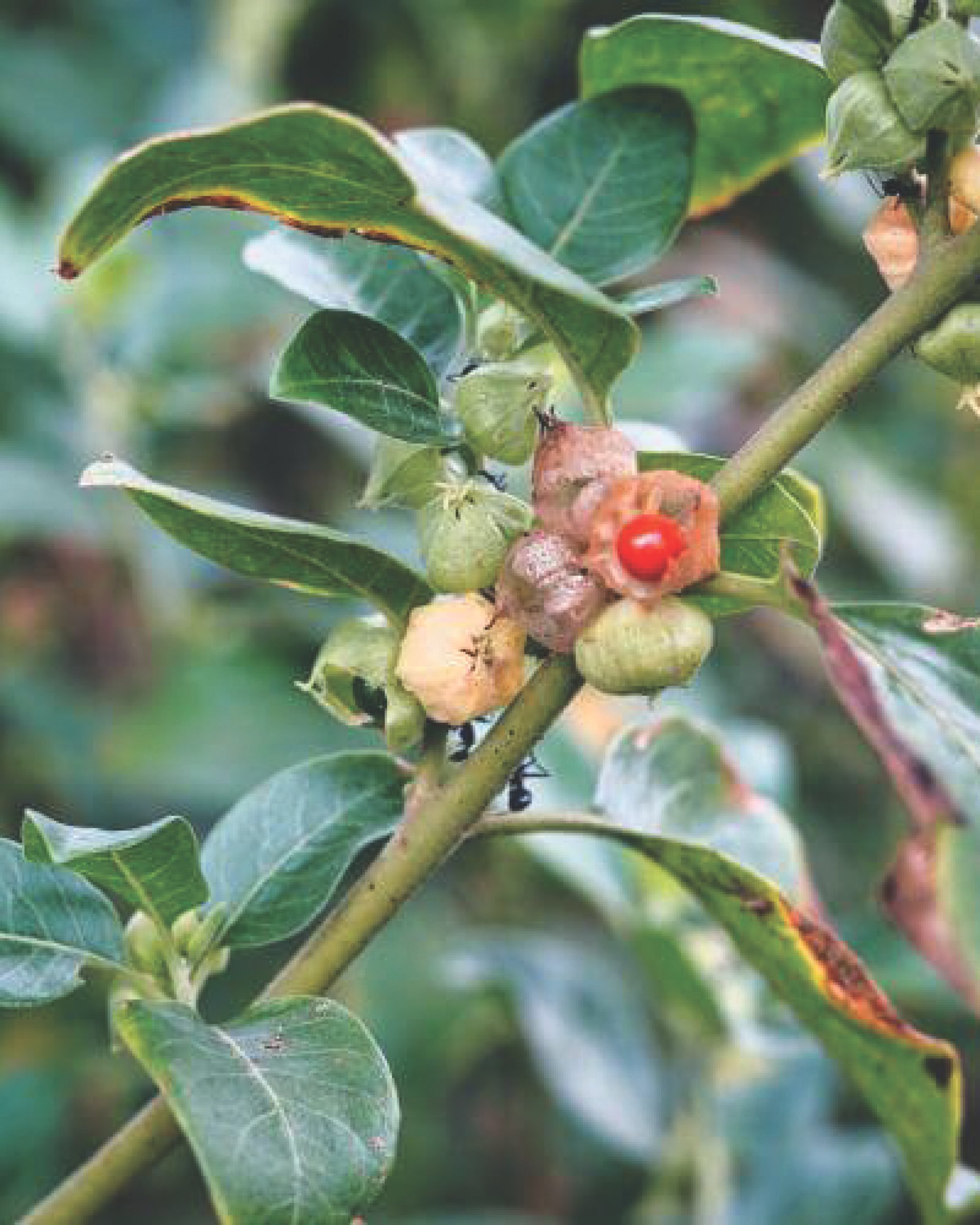
Botanical name : Psoralea corylifolia
| Family | Fabaceae |
| Part used | Seeds |
| Active compounds | Bakuchiol |
| Also known as | Babchi / Bakuchi |
| Grown in | India and other parts of South & Southeast Asia |
| Traditional use | Ayurvedic and traditional skin wellness |
- Botanical name : Psoralea corylifolia
- First Things First: What Is Ashwagandha?
- Why Is Everyone Suddenly Talking About It?
- Ashwagandha and Stress: Why Is It So Popular?
- But What Does “Stress Support” Actually Mean?
- What About Sleep?
- What About Anxiety?
- The Testosterone Question
- What About Fertility?
- Can Ashwagandha Help You at the Gym?
- Here’s Something Most People Don’t Know: Not All Ashwagandha Is the Same
- Root vs Leaf: What’s the Difference?
- Powder or Extract?
- So What Are Withanolides?
- Is Ashwagandha Actually Safe?
- The Liver Question Nobody Should Ignore
- Who Should Think Twice Before Taking Ashwagandha?
- How to Choose a Good Ashwagandha Product
- Frequently Asked Questions
There’s a reason bakuchiol has become one of the most talked-about botanical ingredients in modern skincare. Often described as a plant-based alternative to retinol, this naturally derived ingredient has found its way into serums, creams, and facial oils designed for people who want smoother, healthier-looking skin without making their routine unnecessarily complicated.
But bakuchiol isn’t simply “natural retinol.” It has its own story, its own chemistry, and a long connection to traditional plant-based practices.
So, what exactly is bakuchiol — and why is everyone talking about it?
Ancient Roots
From Babchi to Beauty
Bakuchiol comes from Psoralea corylifolia, traditionally known as Babchi. This botanical has a long history of use in traditional Asian wellness practices, particularly in preparations associated with skin health.
Modern Skincare
A New-Age Botanical
Today, bakuchiol is gaining attention in modern skincare for its potential to improve the appearance of fine lines, uneven tone, and skin texture. Its growing popularity comes from research exploring its retinol-like cosmetic effects—without being a retinoid itself.
Meet Bakuchiol
Bakuchiol is a naturally occurring compound primarily obtained from the seeds of Psoralea corylifolia, a plant also known as Cullen corylifolium or Babchi.
The plant has a long history in traditional Asian systems of medicine. Its seeds have traditionally been used in various preparations, particularly in practices associated with skin health.
Today, modern skincare has taken an interest in bakuchiol for a different reason: researchers have been studying its potential effects on the appearance and overall condition of the skin.
From Traditional Plant to Modern Skincare
The story of bakuchiol is an interesting meeting point between traditional botanical knowledge and modern cosmetic science.
For generations, Babchi has been valued as a medicinal plant. As interest in plant-derived skincare grew, researchers began examining individual compounds found within the plant.
Bakuchiol emerged as one of the most interesting.
Unlike retinoids, bakuchiol is not a vitamin A derivative. Yet research has explored whether it can influence some of the same skin-related pathways associated with retinol, including those involved in skin texture and signs of ageing.
That distinction matters.
Bakuchiol isn’t retinol extracted from a plant. It’s a completely different molecule that has attracted attention because of some potentially similar cosmetic benefits.
Why Is Bakuchiol Popular?
Skincare can sometimes feel like a chemistry lesson.
Retinoids are well established in dermatology and cosmetic science, but some people find them difficult to incorporate into their routines because of irritation, dryness, or sensitivity.
Bakuchiol has become appealing partly because it offers another ingredient to explore.
Research published in the International Journal of Cosmetic Science has investigated bakuchiol’s potential in improving the appearance of photoaged skin. A small randomized study published in the British Journal of Dermatology also compared bakuchiol with retinol and reported improvements in several measures of photoageing, while the retinol group experienced more scaling and stinging.
That doesn’t make bakuchiol a universal replacement for retinoids. It simply makes it an interesting botanical ingredient worth understanding.
What Can Bakuchiol Do for the Skin?
Supports Smoother-Looking Skin: One of the reasons bakuchiol appears in anti-ageing skincare is its potential to improve the appearance of fine lines and uneven skin texture.
With consistent skincare, ingredients that support skin renewal and collagen-related pathways may help skin appear smoother and more refined over time.
Helps Improve the Look of Uneven Tone: Sun exposure and other environmental factors can contribute to uneven pigmentation and dull-looking skin.
Bakuchiol has been studied for its potential effects on pigmentation and skin tone, making it an ingredient commonly found in products targeting a brighter, more even-looking complexion.
Antioxidant Properties : Our skin is constantly exposed to environmental stressors.
Bakuchiol has demonstrated antioxidant activity in research, which is one reason it continues to attract interest as a botanical skincare ingredient.
Antioxidants are commonly used in skincare because they help defend against oxidative stress caused by reactive molecules.
A Gentle Option for Some Skin Types : Bakuchiol is often marketed as a gentler alternative to retinol. While individual reactions can vary, some clinical research has reported fewer irritation-related effects compared with retinol.
Still, “gentle” doesn’t mean irritation is impossible. Every skin type is different, and introducing any new active gradually is sensible.
Bakuchiol vs. Retinol
This is probably the question that brings most people to bakuchiol.
The two ingredients are not chemically the same.
Retinol belongs to the vitamin A family, while bakuchiol is a meroterpene phenol derived from plants.
However, research suggests that bakuchiol may influence some biological pathways that overlap with those associated with retinoids.
| Bakuchiol | Retinol |
|---|---|
| Plant-derived compound | Vitamin A derivative |
| Not a retinoid | Retinoid |
| Studied for signs of skin ageing | Well-established for signs of skin ageing |
| Often used in botanical skincare | Widely used in dermatology and cosmetics |
| Generally considered well tolerated by many users | Can cause dryness and irritation, especially when starting |
The takeaway?
Bakuchiol isn’t “better retinol.” It’s a different ingredient with an interesting research profile.
Is Bakuchiol Suitable for Everyone?
Bakuchiol is generally considered a well-tolerated cosmetic ingredient, but no skincare ingredient is guaranteed to suit everyone.
If you have particularly sensitive skin, allergies, an existing skin condition, or you’re pregnant or breastfeeding, it’s worth discussing new active skincare ingredients with a dermatologist or healthcare professional.
A patch test can also help you see how your skin responds before applying a new product more broadly.
The Bigger Picture
The fascination with bakuchiol isn’t really about finding a “natural replacement” for every synthetic ingredient. It’s about discovering what plants can offer and then understanding those compounds through modern research.
Bakuchiol sits right in that space.
It comes from a plant with a long history of traditional use, yet its modern popularity comes from scientific interest in its effects on skin biology and appearance. That combination of ancient botanical knowledge and modern skincare science is what makes bakuchiol particularly interesting.
Frequently Asked Questions
What is Bakuchiol?
Bakuchiol is a naturally occurring botanical compound primarily obtained from the seeds of Psoralea corylifolia, commonly known as Babchi. It has gained popularity in skincare because research has explored its potential to improve the appearance of fine lines, uneven skin tone, and skin texture.
Is Bakuchiol the same as retinol?
No. Bakuchiol and retinol are chemically different ingredients. Retinol is a vitamin A derivative, while bakuchiol is a plant-derived compound. They are often compared because research suggests bakuchiol may produce some similar cosmetic effects.
Is Bakuchiol a natural ingredient?
Bakuchiol is plant-derived and is primarily sourced from Babchi seeds. However, whether a finished skincare product is considered “natural” depends on the complete formulation and how its ingredients are processed.
What is Bakuchiol used for?
Bakuchiol is commonly used in skincare products formulated to address the appearance of fine lines, uneven pigmentation, dullness, and uneven skin texture.
Can Bakuchiol be used every day?
Many bakuchiol products are formulated for regular use, but the recommended frequency depends on the product and your skin. If you’re introducing it for the first time, starting gradually can help you understand how your skin responds.
Can Bakuchiol replace retinol?
Bakuchiol isn’t a direct replacement for retinol because the two ingredients work differently. It can, however, be an appealing alternative for people looking to explore a botanical ingredient with some overlapping cosmetic benefits.
Is Bakuchiol suitable for sensitive skin?
Bakuchiol is often well tolerated, but sensitive skin can react to almost any skincare ingredient. It’s sensible to patch-test a new product and follow the manufacturer’s directions.
Where does Bakuchiol come from?
Bakuchiol is primarily obtained from the seeds of Psoralea corylifolia, also known as Babchi. The plant has a long history in traditional Asian medicine.
Does Bakuchiol have anti-ageing benefits?
Research has investigated bakuchiol for its potential to improve visible signs of skin ageing, including fine lines, wrinkles, pigmentation, and overall skin texture. Results can vary depending on the formulation and individual skin.
Is Bakuchiol safe to use?
Bakuchiol is widely used as a cosmetic skincare ingredient and is generally considered well tolerated. However, individual sensitivity varies. Anyone with a skin condition, allergies, or specific medical concerns should consult a dermatologist before introducing new active skincare ingredients.
This article is intended for general educational purposes and is not a substitute for personalized medical advice.