
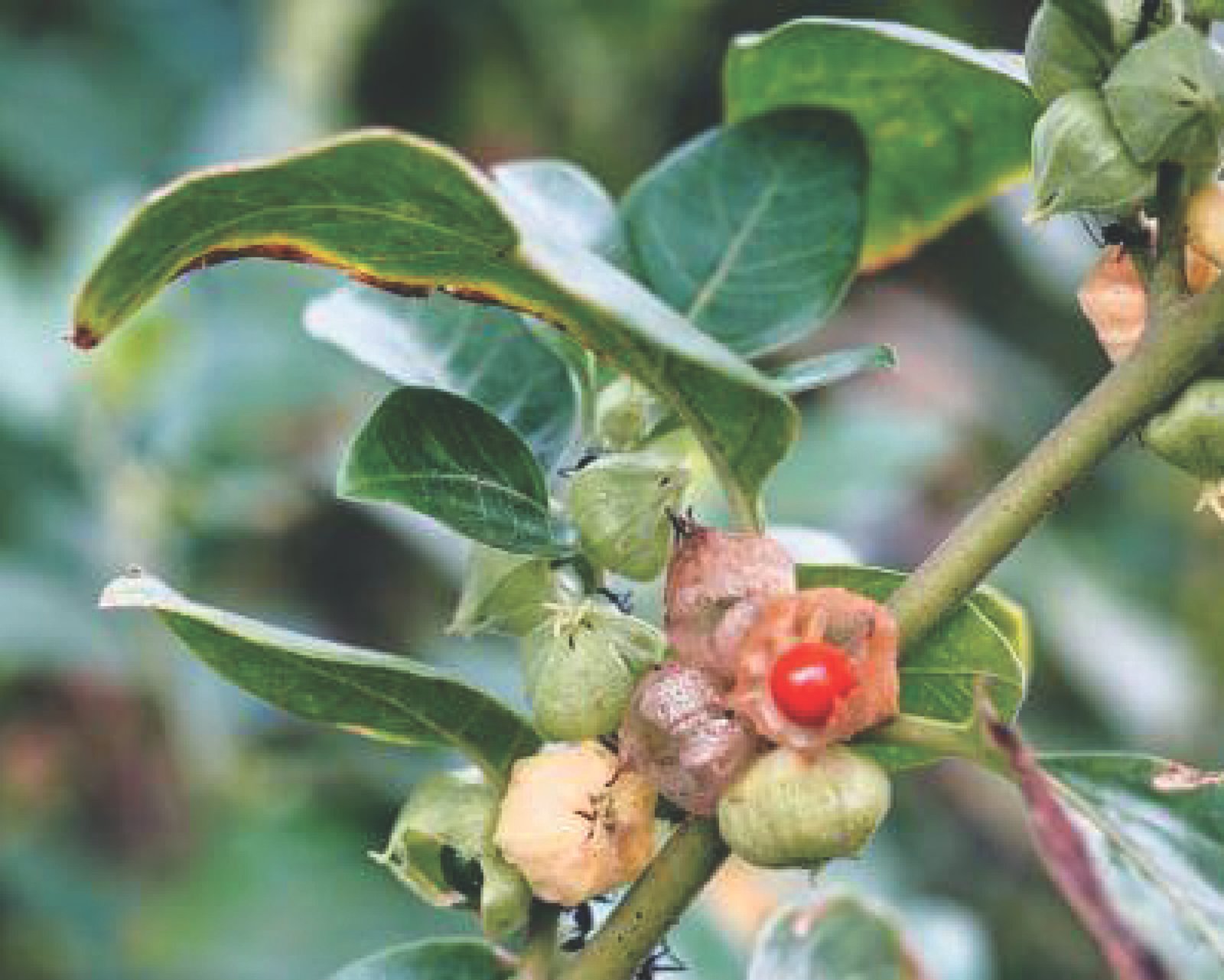
Botanical name : Withania somnifera
| Family | Solanaceae |
| Part used | Root |
| Active compounds | Withanolides |
| Grown in | Madhya Pradesh |
| Dosha effect | Balances Vata and Kapha |
- Botanical name : Withania somnifera
- First Things First: What Is Ashwagandha?
- Why Is Everyone Suddenly Talking About It?
- Ashwagandha and Stress: Why Is It So Popular?
- But What Does “Stress Support” Actually Mean?
- What About Sleep?
- What About Anxiety?
- The Testosterone Question
- What About Fertility?
- Can Ashwagandha Help You at the Gym?
- Here’s Something Most People Don’t Know: Not All Ashwagandha Is the Same
- Root vs Leaf: What’s the Difference?
- Powder or Extract?
- So What Are Withanolides?
- Is Ashwagandha Actually Safe?
- The Liver Question Nobody Should Ignore
- Who Should Think Twice Before Taking Ashwagandha?
- How to Choose a Good Ashwagandha Product
- Frequently Asked Questions
There was a time when Ashwagandha was something you were more likely to find in an Ayurvedic household than on the shelves of a modern wellness store.
Today?
You can find it in capsules, powders, gummies, teas and wellness blends.
It has become one of the most talked-about herbs for stress, sleep, energy, fitness and everyday wellbeing.
And there’s an interesting reason for that.
Ashwagandha isn’t a new discovery.
It has been used in Ayurveda for centuries.
What is new is that modern researchers are now asking a very modern question:
What does this ancient herb actually do?
Let’s find out.
Ancient Roots
A treasured Ayurvedic herb for centuries
Known in Ayurveda as Ashwagandha (Withania somnifera), this adaptogenic herb has a long history in traditional wellness practices. Its name is often associated with strength and vitality, reflecting the important place it has held in Ayurvedic traditions.
Modern Wellness
An ancient herb finding a place in modern life
Today, Ashwagandha continues to attract attention as people explore traditional herbs for everyday wellness. Modern research is investigating its potential role in areas such as stress, sleep, energy, and overall well-being.
First Things First: What Is Ashwagandha?
Ashwagandha is an Ayurvedic herb known by its botanical name, Withania somnifera.
It is also known by names such as Indian ginseng and winter cherry, although it is not botanically related to true ginseng.
The plant belongs to the Solanaceae (nightshade) family, which also includes familiar plants such as tomatoes, potatoes and eggplants.
Ashwagandha has traditionally been used in Ayurveda as a Rasayana—a category of preparations traditionally associated with supporting strength, vitality and overall wellbeing.
The name itself has an unusual story.
“Ashwagandha” comes from Sanskrit and is traditionally associated with the smell of a horse. The name has also been linked with the traditional idea of gaining the strength and vitality of a horse.
Quite a name for a little plant. But the interesting part isn’t its name. It’s what’s inside the plant.
Ashwagandha contains naturally occurring compounds called withanolides, which have become an important focus of modern research. And this is where the ancient herb meets modern science.
Why Is Everyone Suddenly Talking About It?
Think about the average day. You wake up…..Check your phone…..Check your emails…..Rush through breakfast…..Work…..Meetings…..Messages…..Traffic…..More work…..
Then you finally get into bed..…and your brain decides that’s the perfect time to think about everything that happened during the day.
It’s no surprise that stress and sleep have become huge wellness concerns.
And Ashwagandha happens to be an herb that researchers have been studying in both areas.
That’s a big reason for its popularity. But there’s another reason:
The internet has made Ashwagandha sound like it can do almost everything.
Stress? Ashwagandha.
Sleep? Ashwagandha.
Gym recovery? Ashwagandha.
Testosterone? Ashwagandha.
Energy? Ashwagandha.
At this point, you could almost wonder whether the plant has been secretly running a wellness company. But the science is more interesting than the marketing.
Ashwagandha and Stress: Why Is It So Popular?
Let’s start with the claim most closely associated with Ashwagandha: stress support.
Several human studies have investigated whether Ashwagandha can influence measures of stress.
A 2024 systematic review and meta-analysis of randomized controlled trials found improvements in perceived stress, anxiety and cortisol compared with placebo, although researchers noted that more research is needed, particularly regarding long-term safety.
That doesn’t mean Ashwagandha makes stress disappear.
Unfortunately, no herb can delete your inbox.
What the research suggests is that certain Ashwagandha preparations may help support the body’s response to stress in some people.
And that’s a much more realistic way to look at it.
But What Does “Stress Support” Actually Mean?
This is an important distinction. When supplement companies say something like:
“Supports stress management” they aren’t necessarily saying:
“You will never feel stressed again.” Stress is part of normal life. The goal isn’t to become a person who never feels pressure. It’s about how the body and mind respond to that pressure.
This is one reason researchers are interested in Ashwagandha.
What About Sleep?
Here’s another situation many people know all too well.
You’re exhausted. You get into bed. You close your eyes. And suddenly your brain remembers:
- That email you forgot to send
- Tomorrow’s meeting
- Something embarrassing from 2017
- A completely unnecessary question about whether penguins have knees
Sleep: cancelled.
Ashwagandha has also been studied for sleep. A systematic review and meta-analysis of randomized controlled trials found improvements in sleep outcomes among adults taking Ashwagandha compared with placebo.
Some studies have particularly investigated people experiencing insomnia or sleep difficulties. But there’s an important point here: Ashwagandha isn’t a sleeping pill.
If you’re consistently struggling to sleep, it’s worth looking at the bigger picture your sleep schedule, stress levels, caffeine intake, screen habits, environment and possible underlying health issues. A supplement shouldn’t become a substitute for understanding why you aren’t sleeping.
What About Anxiety?
This is where things get a little more complicated. Several studies have investigated Ashwagandha for anxiety-related symptoms.
The results are promising, but the evidence isn’t strong enough to say that Ashwagandha is a proven treatment for an anxiety disorder. Some research reviews have found improvements in anxiety measures, while researchers have also called for more rigorous clinical trials.
So there is a difference between saying: “Ashwagandha may support stress and anxiety-related symptoms.” and saying: “Ashwagandha treats anxiety.” The first reflects the research more accurately. The second goes much further than the evidence allows.
The Testosterone Question
Now we get to one of the biggest reasons Ashwagandha appears in men’s wellness and fitness products.
Testosterone.
You’ve probably seen the claims:
“Boost testosterone naturally.”
“Increase testosterone with Ashwagandha.”
But what does the research actually say? Some studies suggest that certain Ashwagandha preparations may increase testosterone levels in some men.
The evidence isn’t universal, and the effect shouldn’t be treated as guaranteed. Testosterone is influenced by plenty of other things too:
Sleep. Exercise. Nutrition. Age. Body composition. Stress. Medical conditions. So taking Ashwagandha while sleeping five hours a night and expecting it to solve everything probably isn’t the strategy.
Your body has a funny habit of noticing the basics.
What About Fertility?
Ashwagandha has also attracted interest in male reproductive health. Some studies have investigated its effects on sperm quality and other fertility-related measures.
The results are interesting enough to justify further research. But fertility is complicated.
If someone is having difficulty conceiving, a supplement shouldn’t replace proper medical evaluation. Think of Ashwagandha as an area of research—not a guaranteed fertility solution.
Can Ashwagandha Help You at the Gym?
This is where things get interesting.
Ashwagandha is increasingly included in fitness supplements because researchers have investigated its relationship with:
- Strength
- Exercise performance
- Recovery
- Stress
- Physical wellbeing
But the evidence isn’t strong enough to call Ashwagandha a proven performance enhancer. The fundamentals still win:
Train well. Eat well. Get enough protein. Sleep. Recover. Repeat. No capsule has figured out how to replace those yet.
Here’s Something Most People Don’t Know: Not All Ashwagandha Is the Same
This is one of the most important things to understand before buying an Ashwagandha product. You might see two bottles sitting next to each other.
Both say:
ASHWAGANDHA
One might contain root powder. Another might contain a concentrated root extract.
Another could contain root and leaf. They aren’t necessarily equivalent. The plant part, extraction process and concentration of active compounds can all differ.
So don’t automatically assume: “More milligrams = better product.” It isn’t that simple.
Root vs Leaf: What’s the Difference?
Ashwagandha products may use different parts of the plant.
You’ll commonly see:
Root
Leaf
Root + leaf
Root extract
Different plant parts can have different chemical profiles.
This matters because research on one preparation shouldn’t automatically be used to make claims about every Ashwagandha product on the market.
In other words: Ashwagandha isn’t just Ashwagandha. The details matter.
Powder or Extract?
This is another question that comes up frequently.
Ashwagandha Powder – This is generally powdered plant material. It is closer to the traditional format many people associate with Ayurvedic herbs.
Ashwagandha Extract – An extract is processed to concentrate certain constituents. Some extracts are standardized based on their withanolide content.
Neither format is automatically “better” for everyone. What matters is understanding what you’re actually buying.
So What Are Withanolides?
Here’s the science bit—but we’ll keep it painless.
Withanolides are naturally occurring compounds found in plants belonging to the Withania genus.
They are among the compounds researchers study when investigating Ashwagandha. You’ll sometimes see a product label mentioning:
“Standardized to X% withanolides.” This information can help explain how concentrated the extract is. And this brings us back to something important:
Don’t judge an Ashwagandha product by the giant number on the front of the bottle. Look at the details.
Is Ashwagandha Actually Safe?
Here’s where we need to take a step back from the wellness hype.
Natural doesn’t mean risk-free.
Ashwagandha has a long history of traditional use, and many people tolerate it well.
But modern research has also identified potential side effects and safety concerns.
Possible side effects include:
- Stomach upset
- Diarrhea
- Vomiting
- Drowsiness
And there’s another issue that deserves attention.
The Liver Question Nobody Should Ignore
Rare cases of liver injury have been reported in people taking Ashwagandha-containing products.
The NIH’s LiverTox database documents cases of clinically apparent liver injury associated with Ashwagandha.
This appears to be uncommon.
But uncommon doesn’t mean irrelevant.
If someone taking Ashwagandha develops symptoms such as:
- Yellow skin or eyes
- Dark urine
- Unusual itching
- Significant nausea
- Abdominal discomfort
- Unusual fatigue
they should seek medical attention.
This is one reason responsible supplement information needs to talk about both potential benefits and potential risks.
Who Should Think Twice Before Taking Ashwagandha?
Ashwagandha isn’t suitable for everyone.
People who are pregnant or breastfeeding are generally advised to avoid it.
Extra caution is also recommended for people with certain:
- Thyroid conditions
- Autoimmune conditions
- Liver conditions
It may also interact with certain medications, including medicines used for blood sugar, blood pressure, thyroid conditions, seizures, sedation and immune suppression.
If you take prescription medication, it’s worth speaking with a healthcare professional before adding a new herbal supplement.
How to Choose a Good Ashwagandha Product
Here’s where things get practical.
Walk into a store or browse online and you’ll see dozens of Ashwagandha products.
Different brands. Different claims. Different formats. Different prices.
So what should you actually look at?
- Check the botanical name
Look for: Withania somnifera
- Check which part of the plant is used
Root? Leaf? Root + leaf?
Don’t assume they’re interchangeable.
- Look at the extract information
Is it powder? Extract? Standardized extract? The label should make this reasonably clear.
- Look for withanolide information
If standardization information is provided, it can help you understand the extract.
- Read the complete ingredient list
Don’t just look at the large word “Ashwagandha.” See what else is inside.
- Look for quality information
Credible manufacturing and quality-testing information can be useful when comparing products.
- Be skeptical of miracle claims
If a product promises to:
- Cure anxiety
- Fix sleep instantly
- Dramatically increase testosterone
- Detox your liver
- Work for everyone
Pause for a moment. Good health rarely comes with a guarantee printed in bold letters.
Frequently Asked Questions
What is Ashwagandha?
Ashwagandha is an Ayurvedic herb scientifically known as Withania somnifera. It has traditionally been used in Ayurveda and is now widely studied as a herbal supplement.
What is Ashwagandha commonly used for?
It is commonly used for stress support, sleep, general wellbeing and other purposes. Research is also exploring its potential effects on anxiety, testosterone, fertility and exercise-related outcomes.
Does Ashwagandha help with stress?
Research suggests that certain Ashwagandha preparations may help reduce measures of perceived stress and cortisol in some people.
Can Ashwagandha help with sleep?
Some clinical studies have reported improvements in sleep quality and other sleep-related measures.
Does Ashwagandha increase testosterone?
Some studies have reported increases in testosterone in certain groups, but the evidence is limited and it should not be considered a guaranteed testosterone booster.
Is Ashwagandha the same as Indian ginseng?
Ashwagandha is sometimes called Indian ginseng, but it is botanically different from true ginseng.
Is Ashwagandha powder the same as an extract?
No. Powder and extracts can differ in concentration, composition and processing.
What are withanolides?
Withanolides are naturally occurring compounds found in Ashwagandha and are among the compounds researchers study when investigating its potential effects.
Can Ashwagandha have side effects?
Yes. Possible side effects include digestive problems and drowsiness. Rare cases of liver injury have also been reported.
Who should avoid Ashwagandha?
Pregnant and breastfeeding individuals are generally advised to avoid it. People with certain thyroid, autoimmune or liver conditions, those preparing for surgery, and people taking certain medications should consult a healthcare professional before using it.
This article is intended for general educational purposes and is not a substitute for personalized medical advice.